
If you've ever picked up a needle and thread (or thought about it), you've probably wondered what actually separates needlepoint, cross stitch, and embroidery. They all involve stitching designs by hand, but the experience of doing each one, the materials you use, and the finished pieces you create are surprisingly different.
Whether you're choosing your first project or you're an experienced stitcher curious about trying something new, this guide breaks down everything you need to know to pick the right craft for you.
What Is Embroidery?
Embroidery is the broadest term of the three. It refers to any decorative needlework done on fabric with a needle and thread. Technically, both cross stitch and needlepoint fall under the embroidery umbrella, but when most people say "embroidery," they mean surface embroidery or freehand embroidery.
In surface embroidery, you work on plain fabric (cotton, linen, silk, or even denim) and use dozens of different stitch types to create flowing, organic designs. Think of floral motifs on a jacket, monograms on towels, or intricate hoop art. The freedom is what makes it appealing: you can blend stitch types, vary your thread weight, and create designs that look almost painted.
Best for: Creative free-form expression, decorating clothing and household textiles, artistic hoop art, and monogramming.
What Is Cross Stitch?
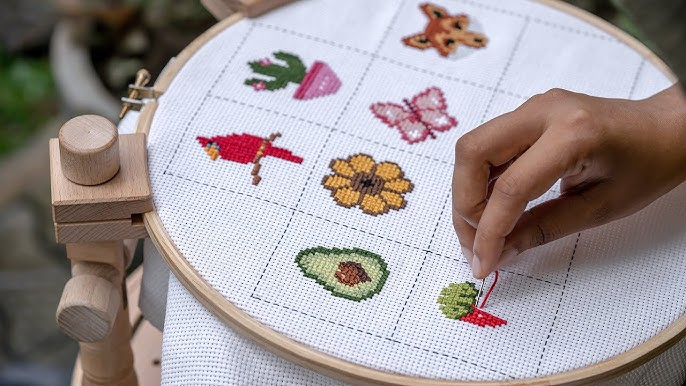
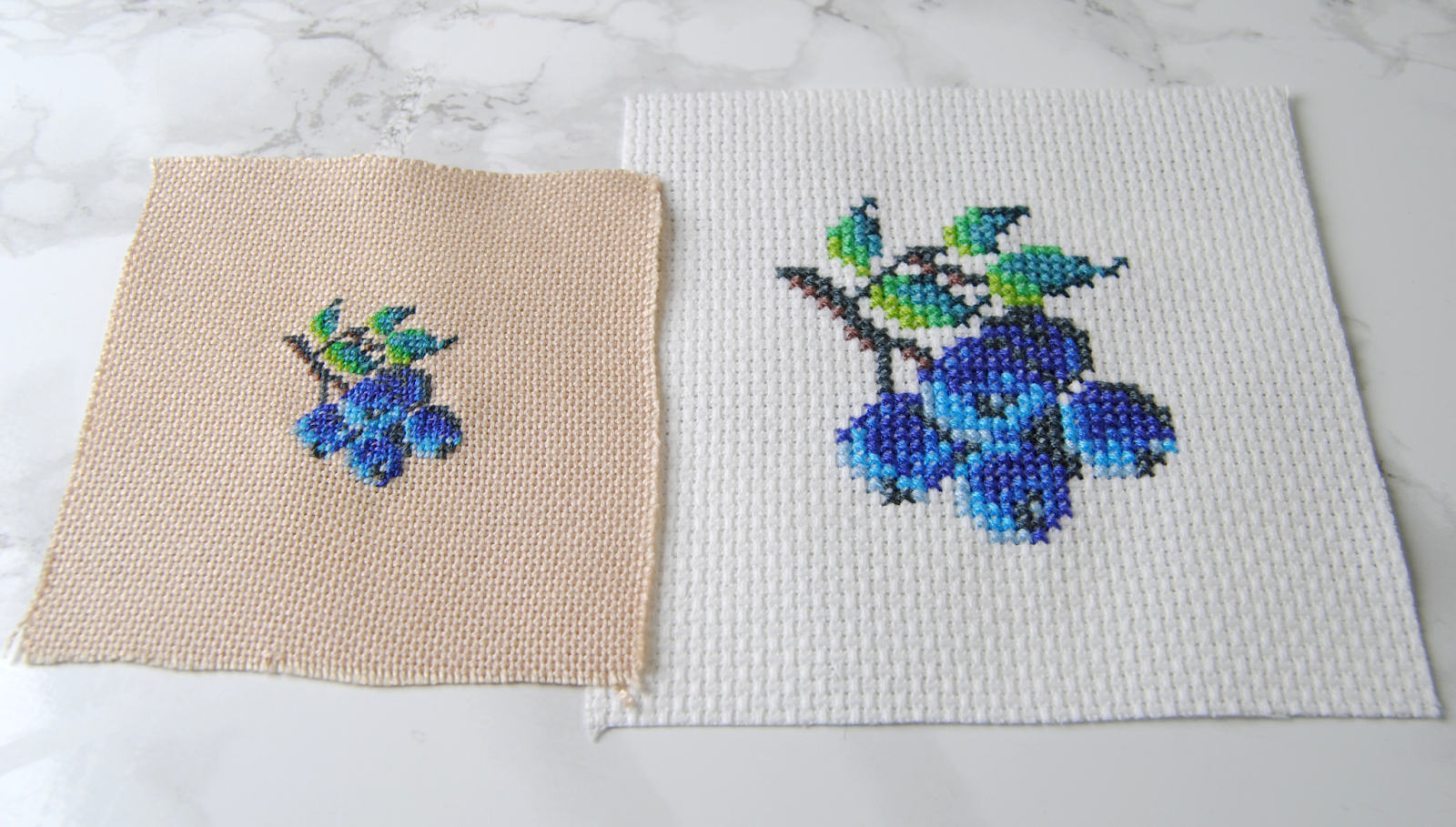
Cross stitch is a counted-thread technique where you create designs entirely with X-shaped stitches on an evenweave fabric, most commonly Aida cloth. Each stitch occupies one square on the fabric's grid, and you follow a charted pattern that tells you exactly which color goes where.
The beauty of cross stitch is its precision and accessibility. Because every stitch is identical (it's always an X), the learning curve is gentle. You count squares, match colors, and watch a pixelated design emerge stitch by stitch. The finished look has a distinctive grid-like quality that works wonderfully for text, geometric patterns, and detailed pictorial designs.
Cross stitch uses stranded cotton embroidery floss, where you can separate individual strands to adjust coverage and detail. Most projects use two or three strands on 14-count Aida (the most popular fabric count for beginners).
Best for: Beginners, pattern-followers, text-based designs, sampler-style wall art, bookmarks, ornaments, and coasters.
What Is Needlepoint?
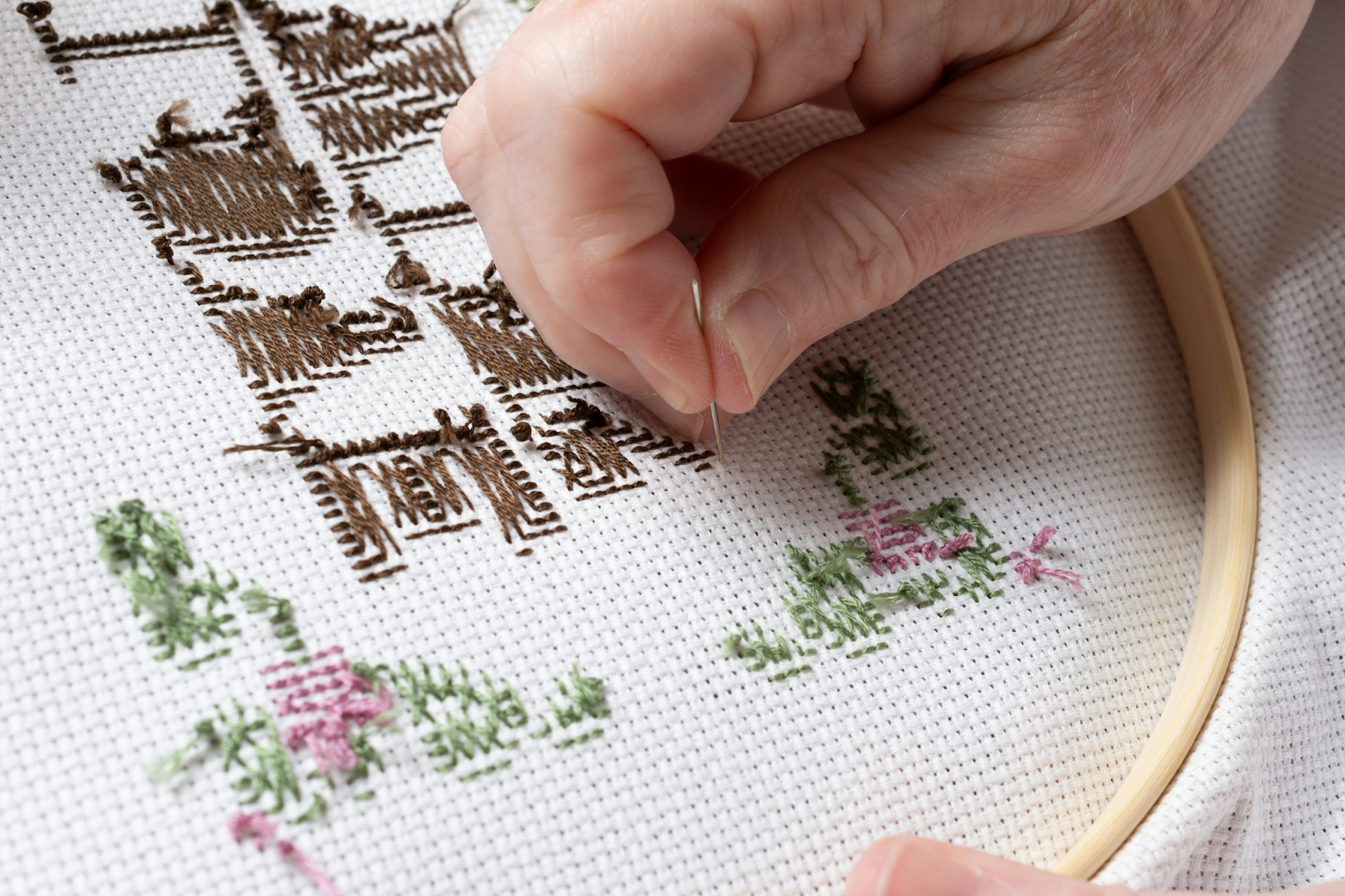
Needlepoint (sometimes called canvas work) is worked on a stiff, open-weave mesh canvas using a blunt tapestry needle. Unlike cross stitch, where stitches sit on top of the fabric, needlepoint stitches cover the entire canvas surface. Every hole gets filled, creating a dense, durable, almost fabric-like finished piece.
The range of stitches available in needlepoint is much wider than cross stitch. The most common is the tent stitch (a small diagonal stitch covering one canvas intersection), but you can also use basketweave, continental, Scotch stitch, brick stitch, Hungarian stitch, Gobelin, and dozens more. Each stitch creates different textures and patterns, giving needlepoint a richness and dimensionality that's hard to achieve with other needlecrafts.
Needlepoint also stands out for its use of hand-painted canvases, where the design is painted directly onto the mesh so you can see exactly where each color goes without counting. This is a completely different experience from following a chart, and many stitchers find it more intuitive and relaxing. [Link to Needlepoint Painted Canvas Service]
Best for: Textured, dimensional pieces, durable functional items (pillows, belts, luggage tags, eyeglass cases), Christmas stockings, upholstery, and wall art with a rich, tapestry-like quality.
Needlepoint vs Cross Stitch vs Embroidery: Side-by-Side Comparison
| Feature | Embroidery | Cross Stitch | Needlepoint |
|---|---|---|---|
| Fabric | Plain fabric (cotton, linen, silk) | Evenweave Aida cloth or linen | Stiff open-weave mesh canvas |
| Needle type | Sharp embroidery needle | Blunt tapestry needle | Blunt tapestry needle |
| Primary stitches | Dozens (satin, stem, chain, French knot, etc.) | X-shaped cross stitch, backstitch | Tent, basketweave, continental, Scotch, brick, and many more |
| Thread/fiber | Stranded cotton floss, silk, wool | Stranded cotton floss (typically 2-3 strands) | Wool (Persian, tapestry, crewel), silk, cotton, metallic |
| Design method | Freehand or traced pattern | Counted chart (grid-based) | Hand-painted canvas or charted pattern |
| Canvas coverage | Partial (design on top of fabric) | Partial (X stitches on fabric grid) | Full (entire canvas surface covered) |
| Finished texture | Varied, can be smooth or dimensional | Flat, uniform, grid-like | Dense, rich, highly textured |
| Difficulty | Moderate (many stitches to learn) | Easiest to start | More complex, but intuitive with painted canvases |
| Typical beginner cost | $10-25 for starter kit | $15-30 for beginner kit | $50-150+ depending on canvas and fibers |
| Common projects | Hoop art, clothing embellishment, home decor | Wall art, bookmarks, coasters, ornaments | Pillows, belts, Christmas stockings, upholstery, wall hangings |
| Portability | High | High | Moderate (canvas is stiffer) |
| Time to complete first project | A few hours to a weekend | A weekend for a small sampler | Several days to weeks depending on canvas size |
How Much Does Each Craft Cost to Start?
Cost is one of the biggest practical differences, and it's worth understanding before you invest.
Cross stitch is the most budget-friendly entry point. A basic kit with Aida fabric, a selection of floss colors, a needle, and a pattern typically runs $15-30. Add a wooden embroidery hoop ($3-8) and a pair of small scissors, and you're fully equipped for well under $50. Individual skeins of embroidery floss cost roughly $0.50-1.00 each, making it easy to build a thread collection over time.
Surface embroidery has a similar starting cost to cross stitch. A beginner kit runs $10-25, and you can use the same embroidery floss and hoops. The main additional investment is in transfer patterns or books if you want structured designs beyond freehand.
Needlepoint is a larger investment, particularly if you choose hand-painted canvases. A quality hand-painted canvas for an intermediate project ranges from $75-200+, and the fibers to stitch it (wool, silk, or specialty threads) can add another $30-100+ depending on the project size and thread choices. A beginner kit with a smaller canvas and included fibers might start around $50-75. That said, needlepoint produces pieces with genuine heirloom quality that can last generations with proper finishing. Many stitchers view it as a meaningful investment in a lasting piece of art rather than a disposable craft project.
Which Stitches Will You Learn?
Cross Stitch Stitches
The core of cross stitch is the cross stitch itself: two diagonal stitches crossing at the center to form an X. Beyond that, you'll likely learn backstitch (used for outlines and lettering), half stitch (for shading effects), and French knots (for small dots and texture). That's essentially the full toolkit, which is part of cross stitch's appeal. Mastery comes from color selection and pattern complexity, not from learning dozens of new techniques.
Needlepoint Stitches
Needlepoint opens up a much wider stitch vocabulary. The foundational stitch is the tent stitch, which has three variations: half cross (simplest, but less durable), continental (good for small areas), and basketweave (best for large areas, doesn't distort the canvas). From there, you can explore decorative stitches that add incredible texture: Scotch stitch creates woven-looking squares, brick stitch mimics a brick wall pattern, Hungarian stitch creates a diamond texture, and Gobelin stitches create long, smooth lines. [Link to Stitch Guide Collection]
Learning new stitches is one of the ongoing pleasures of needlepoint. Each stitch changes the way light hits the thread, the texture you feel when you run your hand over the piece, and the overall visual effect of the design.
Embroidery Stitches
Surface embroidery arguably has the widest stitch vocabulary of all. Commonly used stitches include satin stitch (for filling smooth areas), stem stitch (for lines and outlines), chain stitch (for curved lines and borders), French knots (for dots and dimension), lazy daisy (for flower petals), and many more. The creative freedom to combine these in a single project is what draws many people to embroidery.
Which Is Easier for Beginners?
Cross stitch is the most approachable starting point. The single stitch type, the clear grid system, and the wide availability of affordable kits and free patterns online make it ideal for someone who has never picked up a needle. You can complete a small project in a weekend and feel a genuine sense of accomplishment.
Needlepoint feels more complex at first because there are more stitch types and the materials are different from what you might have encountered before. However, many stitchers find that needlepoint with a hand-painted canvas is actually very relaxing because you don't have to count threads or follow a complex chart. The design is right there on the canvas, and you simply fill it in. If you find counting tedious or stressful, needlepoint might actually suit you better than cross stitch despite being "harder" on paper.
Surface embroidery falls in between. The stitches themselves are easy to learn individually, but combining them into a cohesive design requires more artistic judgment than either cross stitch or needlepoint.
A common progression for many crafters is: start with cross stitch to build confidence and basic needle skills, then move into needlepoint for richer texture and more functional finished pieces, and explore surface embroidery when you want full creative freedom.
What Can You Make with Each Craft?
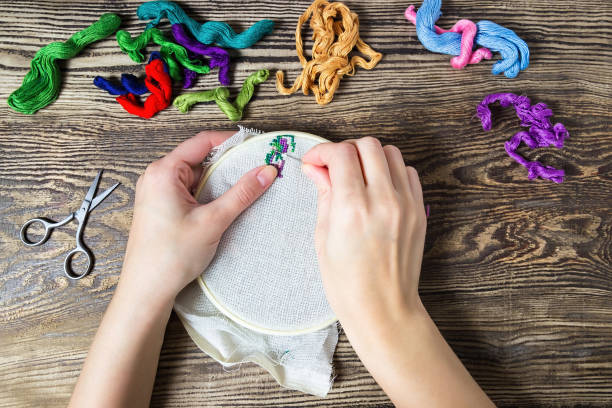
Cross Stitch Projects
Cross stitch excels at flat, framed pieces. Popular projects include framed wall art, decorative samplers, holiday ornaments, bookmarks, greeting cards, and small coasters. The flat, grid-based finish means cross stitch pieces look best when displayed behind glass or mounted flat.
Needlepoint Projects
Needlepoint's density and durability make it ideal for functional items that get handled and used. Think throw pillows, belts, luggage tags, eyeglass cases, coasters, Christmas stockings, chair seats, footstools, and wall hangings. A well-finished needlepoint pillow or stocking becomes a genuine heirloom, passed down through families. The finishing process (where your stitched canvas is constructed into a finished object by a professional finisher or by hand) is an important final step that elevates a needlepoint piece from craft project to polished decor.
Embroidery Projects
Surface embroidery is the most versatile for wearable and functional textile decoration. Popular projects include embellished denim jackets, monogrammed linens, hoop art for wall display, tote bags, baby clothes, and decorative patches.
The Therapeutic Side: Why Stitching Is Good for You
All three needlecrafts share a powerful benefit that goes beyond the finished piece: they are genuinely good for your mental health. Research shows that repetitive, rhythmic hand motions like stitching can lower cortisol levels, reduce anxiety, and promote a meditative state of focused calm often called "flow."
Cross stitch's counting and pattern-following can quiet a busy mind by providing a structured, absorbing task. Needlepoint's rich textures and color choices engage the senses in a way many stitchers describe as deeply soothing. And all forms of embroidery create a tangible, visible record of time invested, which provides a sense of accomplishment that digital activities rarely match.
The crafting community itself is also a source of connection. Online groups, local stitch-and-sip gatherings, and needlework guilds provide social bonds that extend well beyond the craft. In an increasingly digital world, working with your hands on a physical object has become a meaningful counterbalance.
Needlepoint vs Cross Stitch: How to Choose
If you're still deciding between the two most commonly compared crafts, here's a simple framework:
Choose cross stitch if you:
- Want the lowest-cost entry point
- Enjoy counting and working from charts
- Prefer a structured, predictable process
- Want to create framed art, ornaments, or flat decorative pieces
- Are picking up a needle for the very first time
Choose needlepoint if you:
- Want to create functional, durable items like pillows and belts
- Prefer working from a painted canvas rather than counting on a chart
- Love texture and want to explore many different stitch types
- Value heirloom-quality finished pieces
- Are ready to invest a bit more in materials for a richer experience
Try both if you: appreciate different creative experiences. Many passionate needleworkers do both, choosing cross stitch for quick, portable projects and needlepoint for larger statement pieces.
Frequently Asked Questions
Is needlepoint the same as cross stitch?
No. While both are forms of counted needlework, they use different fabrics (stiff mesh canvas for needlepoint vs. evenweave Aida for cross stitch), different stitch types (tent stitch and many decorative stitches for needlepoint vs. the X-shaped cross stitch), and different threads (wool and silk yarns for needlepoint vs. stranded cotton floss for cross stitch). The finished look and typical projects are also quite different.
Is needlepoint harder than cross stitch?
Needlepoint has a wider range of stitches to learn, which gives it a steeper initial learning curve. However, many beginners find that stitching on a hand-painted needlepoint canvas (where the design is printed directly on the mesh) feels easier and more relaxing than counting stitches on a cross stitch chart. Difficulty depends more on your personal preference for counting vs. visual stitching than on the craft itself.
Can you do cross stitch on needlepoint canvas?
Technically yes. You can work a cross stitch on needlepoint canvas, and some needlepoint designs incorporate cross stitches as one of many stitch types. However, the result will look and feel different from traditional cross stitch on Aida cloth because needlepoint canvas is stiffer and the mesh is more open. For the best results with cross stitch patterns, use Aida cloth or evenweave linen.
What is the difference between needlepoint and embroidery?
Needlepoint is actually a type of embroidery (specifically, canvas work). However, when people refer to "embroidery" casually, they typically mean surface embroidery: freehand stitching on plain fabric. The key difference is that needlepoint uses stiff mesh canvas and covers the entire surface with stitches, while surface embroidery decorates the top of plain fabric without covering it completely.
Which is more expensive, needlepoint or cross stitch?
Needlepoint is generally the more expensive craft. Hand-painted canvases can range from $50 for small designs to $200+ for larger, more detailed pieces, and quality fibers add to the cost. Cross stitch kits start as low as $15-30 for beginner projects. That said, needlepoint produces exceptionally durable, heirloom-quality pieces that can last for decades.
How long does a needlepoint project take compared to cross stitch?
It depends on the size, but needlepoint projects generally take longer because you're covering the entire canvas surface. A small cross stitch piece might take a weekend; a comparable needlepoint piece might take one to three weeks of regular stitching. Larger needlepoint projects (full-size pillows, stockings) can take months, which is part of the meditative appeal for many stitchers.
Can I switch from cross stitch to needlepoint?
Absolutely. The skills transfer well. If you can hold a needle, follow a pattern, and manage thread tension, you'll pick up needlepoint quickly. The main adjustment is learning to work on canvas instead of Aida and expanding your stitch vocabulary beyond the basic cross stitch. Many stitchers describe needlepoint as a natural next step after mastering cross stitch.
Ready to Start Stitching?
If needlepoint calls to you, there's no better time to start. A beginner-friendly painted canvas, a set of matched fibers, and a tapestry needle are all you need.
Already a cross stitcher curious about needlepoint? Your skills will transfer beautifully. Browse our hand-painted canvas collection to find a design that speaks to you, and discover why so many stitchers fall in love with the texture and richness of needlepoint.
Looking for guidance on stitches? Our stitch guides walk you through every technique from basic tent stitch to advanced decorative stitches, with step-by-step photos and tips.


It is all embroidery. Cross stitch is a stitch of embroidery.
I would suggest you tube for specific embroidery stitches. 🙃
The article says that Needlepoint is a type of embroidery that uses a stiff, open-weave canvas (often called mesh canvas) as the base.
The headline for this blog entry, when using Google, states “ Embroidery vs Needlepoint vs Cross Stitch – What to Shop
Unsure what to buy?
Understand how needlepoint, embroidery & cross stitch differ so you can pick the right kits …” It’s frustrating that your blog entry is the top sponsored result but does NOT mention embroidery at all… Maybe you had full intent on having a part on embroidery too, but perhaps that part slipped your mind? I have ADHD and understand that things like this happen. I’m mentioning it, incase the missing 3rd part of the titled blog post was omitted by accident and it can be added